What Is Pilates? Benefits, History, and How to Get Started
What Is Pilates?
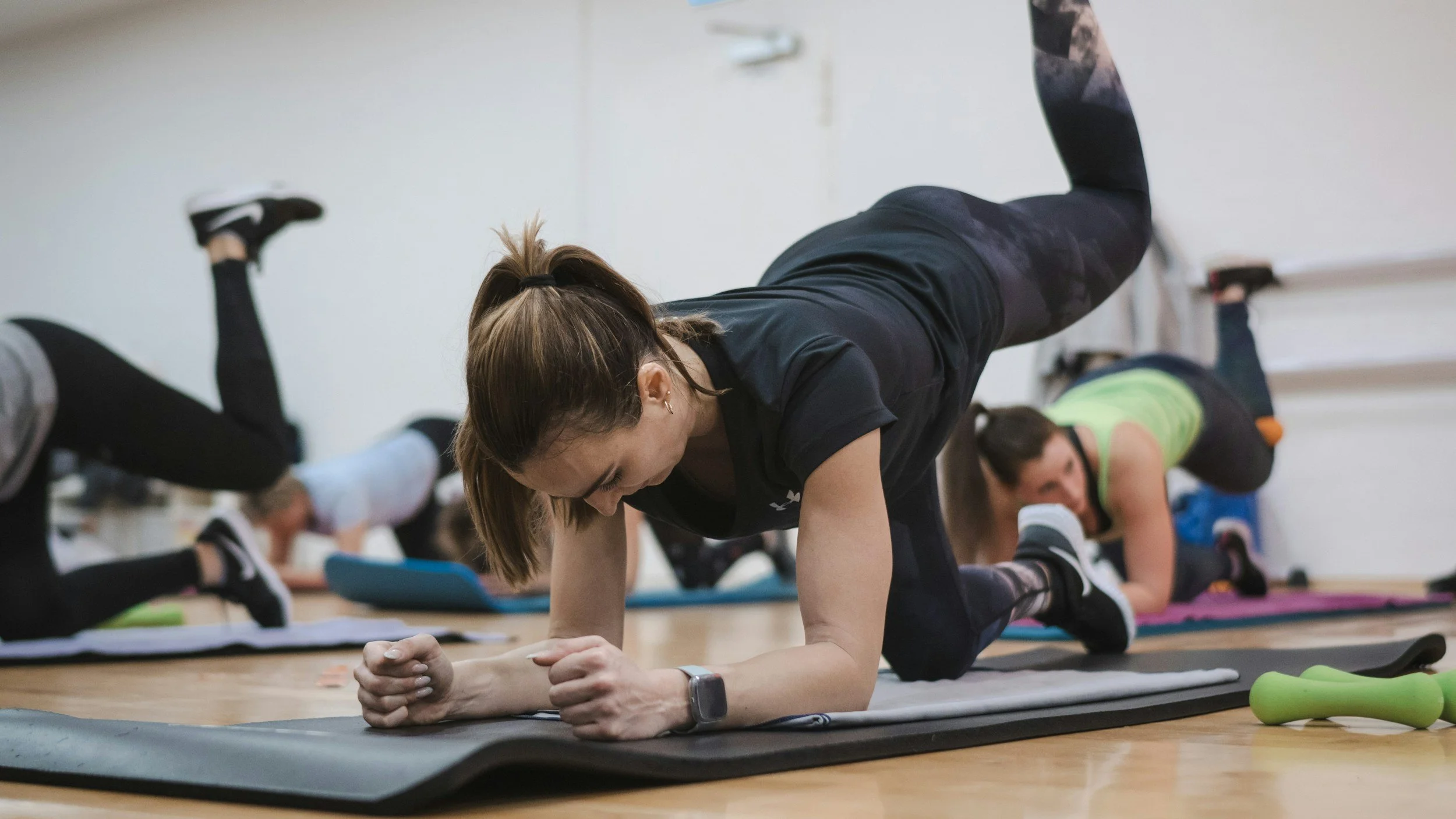
Pilates is a low-impact form of exercise that focuses on strengthening the body's core muscles while improving flexibility, posture, balance, and overall body control. It combines precise movements with controlled breathing to develop strength without adding bulk, making it suitable for people of all ages and fitness levels. Originally developed as a rehabilitation method, Pilates is now widely practised to improve physical fitness, prevent injuries, and enhance mental wellbeing. Whether performed on a mat or using specialised equipment, Pilates encourages mindful movement, helping individuals build a stronger body, improve coordination, and develop greater awareness of their posture and movement patterns.
Brief History
Pilates was created in the early 20th century by Joseph Pilates, a German physical trainer who believed that physical and mental health were closely connected. During the First World War, he developed exercises to help injured soldiers regain strength and mobility by attaching springs to hospital beds, which later inspired modern Pilates equipment. After moving to New York City in the 1920s, Joseph Pilates opened his first studio, where dancers and athletes used his methods to improve strength, recover from injuries, and enhance performance. Over time, Pilates became recognised worldwide as an effective form of exercise that improves posture, flexibility, muscle strength, and overall wellbeing. Today, it is practised in gyms, studios, rehabilitation clinics, and homes across the world.
How Pilates Can Help You Develop a Resilient, Assertive Mindset
Practising Pilates can help develop a resilient and assertive mindset by building both physical and mental strength. The controlled movements require concentration, patience, and discipline, encouraging individuals to stay focused and committed as they improve over time. As strength, balance, and coordination develop, many people experience increased self-confidence and trust in their abilities. Pilates also teaches body awareness and controlled breathing, helping practitioners remain calm under pressure and manage stress more effectively. By overcoming physical challenges and consistently progressing towards new goals, individuals develop resilience, determination, and the confidence to approach everyday situations with a positive and assertive attitude.
Benefits
Physical Benefits
Strengthens core muscles
Pilates targets the abdominal, back, and pelvic muscles, creating a strong foundation that supports the entire body.Improves posture
Strengthening the muscles that support the spine helps improve posture and reduces the risk of back pain.Increases flexibility
Regular stretching and controlled movements improve muscle flexibility and joint mobility.Enhances balance and coordination
Pilates develops body awareness, making movements more controlled and improving overall coordination.Supports injury prevention and recovery
Low-impact exercises strengthen muscles around the joints, helping reduce the risk of injury and supporting rehabilitation.
Mental Benefits
Reduces stress and anxiety
Controlled breathing and mindful movement help relax the mind and reduce everyday stress.Improves concentration and focus
Following precise movement patterns develops mental focus and attention to detail.Boosts confidence
As strength and fitness improve, many people feel more confident in their physical abilities.Promotes mindfulness
Pilates encourages individuals to stay present and aware of their body's movements, improving emotional wellbeing.Can improve sleep and energy levels
Regular exercise supports better sleep quality while increasing energy throughout the day.
Pilates does far more than improve physical fitness, it also develops many of the personal qualities that support assertiveness. A stronger core and improved posture naturally encourage a more confident presence, helping you stand taller and communicate with greater self-assurance. Better balance, coordination and body awareness increase your sense of control, making you feel more grounded and composed in challenging situations. The mindful breathing and focused movements used throughout Pilates help reduce stress and anxiety, making it easier to respond calmly rather than react emotionally when setting boundaries or expressing your opinions. As concentration, confidence and physical capability grow, so does belief in your own abilities, making it easier to speak up, make decisions and trust your judgement. By promoting mindfulness, emotional wellbeing, better sleep and increased energy, Pilates also helps build the resilience needed to remain calm, confident and assertive in everyday life.
How to Get Started
Getting started with Pilates is simple and requires very little equipment. Beginners can start with a comfortable exercise mat, supportive clothing that allows free movement, and enough space to stretch and exercise safely. It is recommended to practise for 20–30 minutes, two to four times per week, gradually increasing the duration and intensity as strength and confidence improve. Learning from a qualified Pilates instructor or following beginner-friendly online classes can help ensure correct technique and reduce the risk of injury.
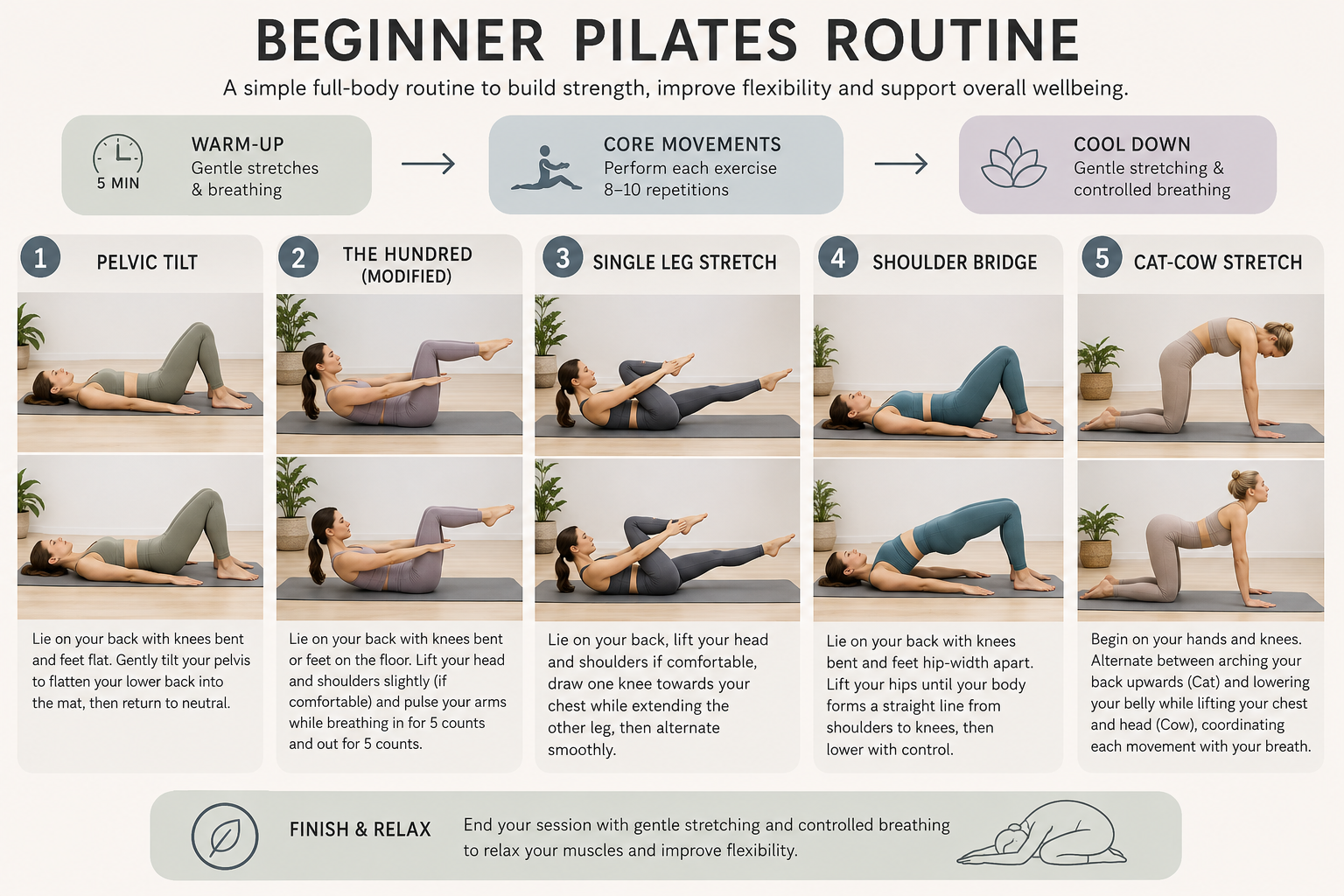
A simple beginner's routine could begin with 5 minutes of gentle warm-up stretches and breathing exercises, followed by basic movements such as the Pelvic Tilt, The Hundred (modified), Single Leg Stretch, Shoulder Bridge, and Cat-Cow Stretch. Finish the session with gentle stretching and controlled breathing to relax the muscles and improve flexibility.
The best time to practise Pilates is often in the morning, as it helps activate the core muscles, improve posture, and increase energy levels for the day ahead. However, an evening session can also be highly beneficial for relieving muscle tension, improving flexibility, and reducing stress after a busy day. Consistency is the key to seeing long-term improvements in strength, posture, and overall wellbeing.
What Is a Pilates Mat Routine?
A Pilates mat routine is a sequence of exercises performed on an exercise mat using your own body weight as resistance. Unlike equipment-based Pilates, mat Pilates requires very little equipment and can be practised almost anywhere. A beginner mat routine focuses on developing core strength, improving posture, increasing flexibility, and learning proper breathing techniques. As strength and confidence increase, more advanced exercises can be introduced to challenge balance, coordination, and muscular endurance.
Summary
Adding Pilates to your weekly routine is an excellent way to improve your physical fitness while supporting your mental wellbeing. By practising for just 20–30 minutes several times a week, you can strengthen your core, improve posture, increase flexibility, and build better balance and coordination. Regular practice also develops discipline, resilience, and self-confidence by encouraging consistent progress and mindful movement. As your strength and body awareness improve, you are likely to become more assertive by trusting your abilities, maintaining better posture, and approaching challenges with greater confidence. Over time, Pilates can help you build a stronger body, a more focused mind, and the resilience needed to succeed both inside and outside of your workouts.