Yoga for Beginners: Benefits, Poses, and How to Get Started
A Beginner’s Guide to Feeling Better in Body and Mind
Yoga has been practiced for thousands of years, yet its appeal today is stronger than ever. Whether you want to improve flexibility, reduce stress, build strength, or simply create a healthier routine, yoga offers a practical and accessible path.
The best part? You don’t need to be flexible, athletic, or experienced to begin.
yoga & Assertiveness
Practicing Yoga can help develop both assertiveness and a growth mindset by strengthening the connection between mental focus and physical awareness. Yoga encourages you to stay present, listen to your body, and move through discomfort with patience rather than avoidance. Over time, this builds confidence in your ability to handle challenges calmly and make decisions with greater self-trust, which are key parts of being assertive. At the same time, yoga teaches that progress comes through consistent effort, practice, and learning from setbacks instead of expecting perfection immediately. Whether holding a difficult pose or improving balance and flexibility gradually, yoga reinforces the idea that abilities can grow with persistence. This mindset can carry into everyday life, helping you become more resilient, open to feedback, and willing to step outside your comfort zone.
What Is Yoga?
Yoga is a mind-body practice that combines movement, breathing, and mindfulness. While many people first encounter yoga through physical poses, the practice goes far beyond exercise. It encourages balance, physically, mentally, and emotionally.
Modern yoga comes in many forms, from slow and meditative sessions to more physically demanding styles. This variety makes it possible for nearly anyone to find a practice that fits their goals and lifestyle.
Benefits of Yoga
1. Improves Flexibility and Mobility
One of the most noticeable benefits of yoga is increased flexibility. Gentle stretching helps loosen tight muscles and improve range of motion over time. Even a few sessions per week can make everyday movements feel easier.
2. Builds Strength
Many yoga poses use body weight to strengthen muscles, especially in the core, legs, arms, and back. Unlike high-impact workouts, yoga builds strength while remaining relatively gentle on the joints.
3. Reduces Stress and Anxiety
Yoga emphasizes controlled breathing and mindfulness, both of which help calm the nervous system. Many people find yoga helps reduce anxiety, improve focus, and create a sense of mental clarity.
4. Enhances Posture and Balance
Hours spent sitting at desks or looking at screens can affect posture. Yoga helps strengthen stabilizing muscles and improves body awareness, leading to better posture and balance.
5. Supports Better Sleep
Relaxation-focused yoga practices can help the body unwind before bedtime. Gentle stretches and breathing exercises may improve sleep quality and help you fall asleep more easily.
6. Encourages Mindfulness
Yoga teaches you to pay attention to your breath, movement, and thoughts in the present moment. This mindfulness often carries into daily life, helping people feel more grounded and less reactive to stress.
Popular Types of Yoga
Different styles offer different experiences. Here are a few beginner-friendly options:
Hatha Yoga – Slow-paced and great for beginners.
Vinyasa Yoga – Flow-based movement connected with breathing.
Yin Yoga – Long-held stretches focused on relaxation and flexibility.
Restorative Yoga – Gentle poses supported by props for deep relaxation.
Power Yoga – More intense and fitness-oriented.
Trying a few styles can help you discover what feels best for your body, personality and what it most appropriate for your personal aims for what you want from yoga.
How to Get Started with Yoga
Starting yoga doesn’t need to be complicated.
Begin Small
You don’t need hour-long classes right away. Start with 10–20 minutes a few times per week. Consistency matters more than intensity.
Focus on Breathing
Breathing is central to yoga. Try slow, steady breaths while moving through poses. This helps calm the mind and improves concentration.
Learn Basic Poses
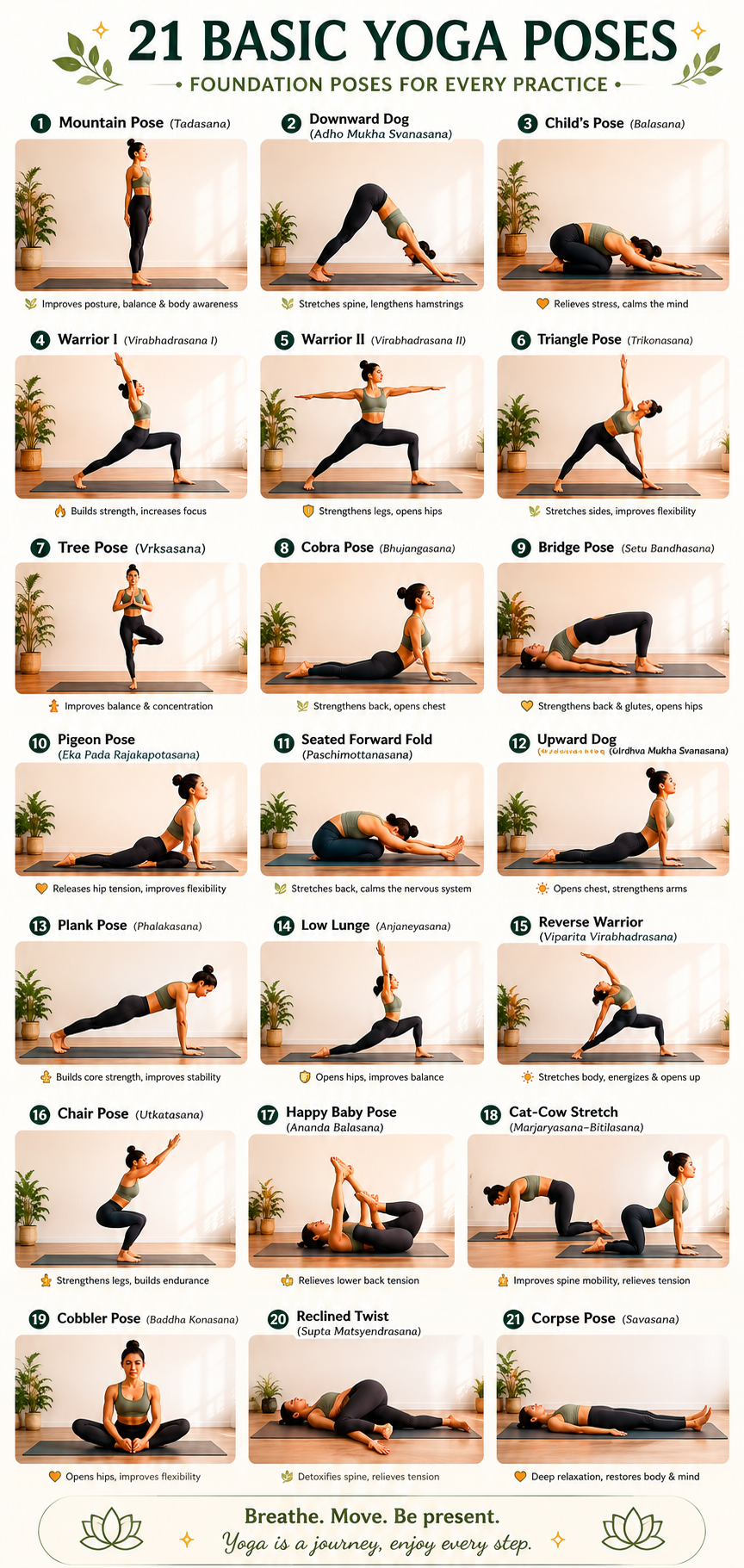
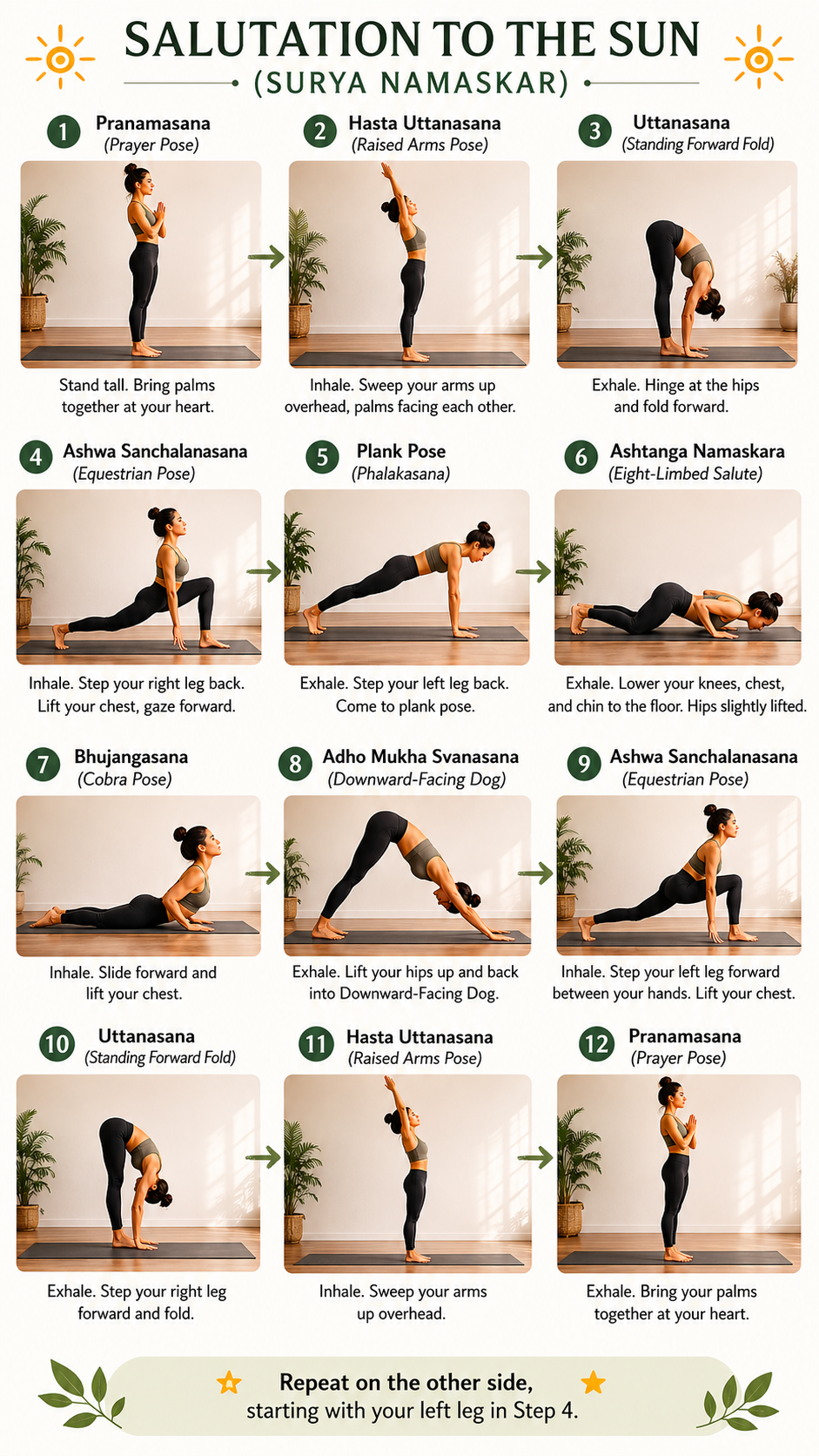
A few foundational poses can build confidence quickly:
Mountain Pose
Child’s Pose
Downward Dog
Cat-Cow Stretch
Warrior I
Tree Pose
These beginner poses improve flexibility, balance, and body awareness.
Use Comfortable Clothing
Wear clothes that allow easy movement. You don’t need expensive equipment — a simple yoga mat is enough to begin.
Listen to Your Body
Yoga should challenge you without causing pain. It’s important to move at your own pace and modify poses when needed.
Yoga for Mental Wellness
Many people begin yoga for physical fitness but stay for the mental benefits. In a fast-paced world filled with distractions and stress, yoga creates space to slow down.
Even a short daily practice can help:
Improve mood
Reduce mental fatigue
Increase self-awareness
Create healthier routines
Yoga is not about perfection. It’s about connection, to your body, your breath, and your overall well-being.
Simple Beginner Yoga Routine
Here’s a quick sequence to try at home:
Deep breathing – 1 minute
Cat-Cow Stretch – 1 minute
Downward Dog – 30 seconds
Child’s Pose – 1 minute
Warrior I – 30 seconds each side
Tree Pose – 30 seconds each side
Seated Forward Fold – 1 minute
Relaxation Pose – 2 minutes
This short routine can help energize your body while calming your mind. There are other traditional sequences to try such as salutation to the sun.
Salutation to the sun
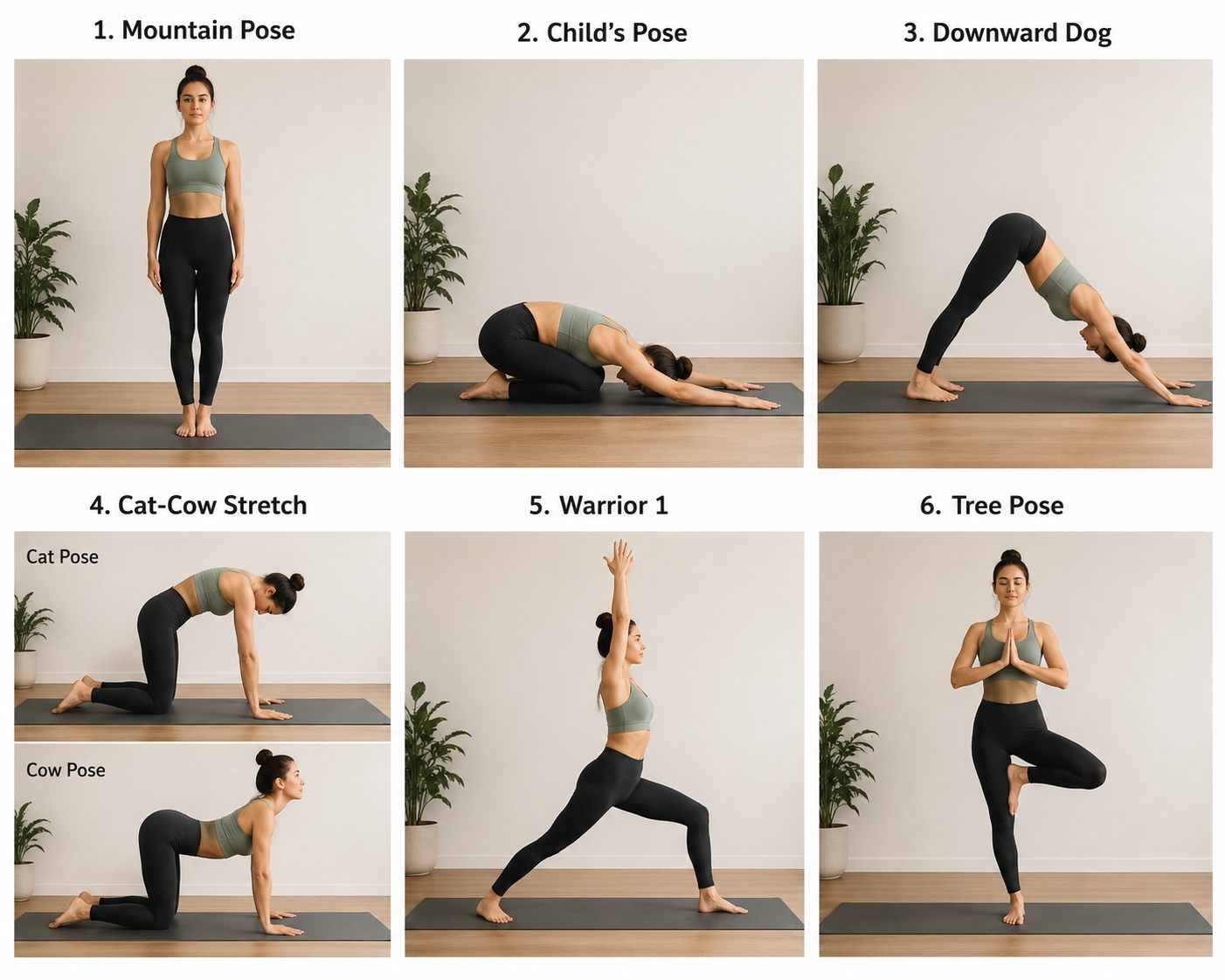
Sun Salutation (Surya Namaskar) is a flowing sequence of yoga postures traditionally practiced as a way to greet the rising sun, warm up the body, and coordinate movement with breath.
When is it typically done?
Morning is the traditional time, ideally around sunrise. Many people find it energizing and use it to start the day.
Before a yoga practice as a warm-up to increase circulation, raise body temperature, and prepare the muscles and joints for more challenging poses.
Any time of day when you want gentle movement, a quick workout, or a mental reset. Practicing late in the evening may feel too stimulating for some people, but this varies by individual.
What is it for?
Physical benefits
Warms up the entire body.
Improves flexibility in the spine, hamstrings, hips, shoulders, and chest.
Builds strength in the legs, core, shoulders, and arms.
Increases heart rate and circulation when repeated continuously.
Enhances balance, coordination, and mobility.
Breath and mindfulness
Links each movement to an inhale or exhale.
Encourages focused attention and body awareness.
Can serve as a moving meditation.
Traditional and spiritual significance
In classical yoga, Surya Namaskar is considered an expression of gratitude and reverence toward the sun as a source of life and energy. Some traditions pair each position with a mantra dedicated to the sun. Many modern practitioners focus primarily on the physical and meditative aspects rather than the spiritual symbolism.
How much should you do?
Beginners: 2–4 rounds at a comfortable pace.
General fitness and mobility: 5–10 rounds.
More vigorous practice: 12 or more rounds, often used as a complete workout.
A "round" usually means performing the sequence on both sides when lunges are included.
Who should be cautious?
People with wrist, shoulder, back, or knee injuries may need modifications. During pregnancy or certain medical conditions, some poses may need to be adjusted. If you have concerns, it's best to consult a qualified yoga instructor or healthcare professional.
The sequence
Even a few rounds can provide a combination of light cardiovascular exercise, stretching, strengthening, and focused breathing in about 5–10 minutes.
Mountain Pose (Tadasana) — standing tall at the front of the mat.
Upward Salute (Urdhva Hastasana) — arms sweep overhead.
Standing Forward Fold (Uttanasana) — fold forward from the hips.
Halfway Lift (Ardha Uttanasana) — lengthen the spine and lift halfway.
Plank Pose — step or jump back into a straight-body plank.
Four-Limbed Staff Pose (Chaturanga Dandasana) — lower with control.
Upward-Facing Dog (Urdhva Mukha Svanasana) — open the chest and lift the torso.
Downward-Facing Dog (Adho Mukha Svanasana) — hips lift up and back; hold for several breaths.
Halfway Lift (Ardha Uttanasana) — step or jump forward and lengthen the spine.
Standing Forward Fold (Uttanasana) — fold forward again.
Upward Salute (Urdhva Hastasana) — rise to standing with arms overhead.
Mountain Pose (Tadasana) — return to the starting position.
Final Thoughts
Yoga is one of the few practices that strengthens both body and mind at the same time. You don’t need special skills or perfect flexibility to begin, only the willingness to start.
With patience and consistency, yoga can become more than a workout. It can become a daily habit that supports better health, reduced stress, and greater balance in life.
Once you get started on your journey, you can begin to be creative. Make up your own sequences based on what you want to work on, or simply find some favourite poses that work together! Focus on ease of flow and transition to make the poses work together.
Your yoga journey doesn’t have to be perfect. It simply has to begin.